
Nothing is easier than a hypothetical decision or “Monday morning quarterbacking.”
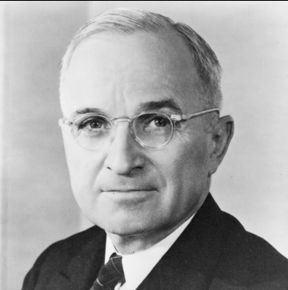
Harry Truman became President of the United States on April 12, 1945, when Franklin Roosevelt died. FDR had kept him remarkably uninformed about major programs. Victory in Europe occurred in May, but the war in the Pacific against Japan was still raging. Truman knew nothing about the “Manhattan Project” or the Atomic Bomb before he became President. He may not have known much about the estimates for the other options.
Norman Polmar and Thomas B. Allen wrote a book called Code-Name Downfall: The Secret Plan to Invade Japan and Why Truman Dropped the Bomb. They wrote an article on that subject called Invasion Most Costly in the August 1995 issue of the Proceedings of the Naval Institute. Wikipedia and Britannica have excellent information about this era.
The battle for Okinawa went from April 1 to June 22 and cost 7,613 American soldiers dead and 31,807 wounded.
Based on my research, I will give you a sad number and ask a question. One hundred thousand Japanese civilians died. Did it happen in Hiroshima or Okinawa? It is a trick question. The answer is “Yes.” It happened in both places. That is a major part of what made one option for Truman so frightening.
The Proceedings article describes the problem Truman faced. Japan faced a demand for total surrender. Germany had also faced that and did not surrender until Hitler was dead in his bunker. Multiple foreign diplomats in Tokyo had described Japan’s strategy.
An intercepted dispatch from the Swiss Minister in Tokyo said that Japan “is still hoping to escape [defeat] by prolonging the war long enough to exhaust [its] enemies. Many eagerly desire the landing of the Americans in Japan proper, since they think it would be the last chance to inflict upon the Americans a defeat serious enough to make them come to terms.”
Truman had two objectives. He wanted to save American lives, and he wanted to end the war as soon as possible. A shorter war would save lives on both sides. It would let Americans get on with life. It would also stop the destruction of Japanese territory.
There were two basic choices: bombing and invasion. Given Japan’s obvious strategy and the nature of previous battles, invasion was going to be very costly in lives on both sides.
Bombing had been happening. A Wikipedia article covers all the bombings up to and through World War II. It covers strategies by all parties and ends with the atomic bombs. There have been claims that Americans were less concerned about harming or killing Asians than they were about killing Europeans. If you look at the history of the bombing, that doesn’t hold up.
German cities were destroyed with only marginal concern for protecting civilians.
in a series of attacks launched by the RAF and US forces in July 1943 on Hamburg, roughly 50,000 civilians were killed and large areas of the city destroyed.
Bombing in Japan was different from Germany because the building materials were different. Army Air Force Generals “Hap” Arnold and Curtis LeMay were trying to show that bombing alone could end the war. Instead of conventional bombs, LeMay was using napalm and firebombing the targets.
[A firebombing raid] on Tokyo ... on the night of 9–10 March, of which 282 Superforts reached their targets, dropping around 1,700 tons of bombs. Around 41 square kilometres (16 mi2) of the city was destroyed and over 100,000 people are estimated to have died in the fire storm. It was the most destructive conventional raid, and the deadliest single bombing raid of any kind in terms of lives lost, in all of military aviation history,[254] even when the missions on Hiroshima and Nagasaki are taken as single events.[255] The city was made primarily of wood and paper, and the fires burned out of control.
Arnold and LeMay were ready to subject Japan to continuous firebombing until nothing, and nobody, would be left standing. A complete food and fuel blockade was already in place. Clearly it was a matter of getting a diehard military group to be willing to surrender.
Truman had to choose between two terrible options. Both would cause the death of many civilians. Japanese leadership would not let civilians be spared during an invasion. Bombing would not cease.
The atomic bombs were not something used in isolation. They were an alternative to an incredibly bloody invasion. They were used in the hope that their shock value would get the Emperor to intervene and end the horror. Somebody needed to say, “Enough!”
It did the job. Hirohito decided the time had come. He recorded a speech. Someone tried to steal the recording to prevent the surrender. It didn’t work. The war ended.
For eighty-one years, people have tried to be wiser and kinder than Harry Truman. He took what he saw as the “least worst” path available, and it worked.
Some people are convinced that America is the source of all evil. America gives them the right to say that and will do so until people like them take over. You can’t argue with them because their purity is an axiomatic belief.
Others believe there is always a gentler answer if you look hard enough. That would mean that there are no evil people in the world. History teaches a different lesson.
I wouldn’t have wanted to be in Truman’s shoes at that point. I suspect he didn’t either. He was. He made the call, and the war ended shortly thereafter.