
I was pleased to see an article in the New York Times entitled Americans Are Turning Against Gay People. Not just because it is happening, but because the presence of the article lives up to the Times’ slogan, “All the News that’s Fit to Print. This “guest essay” by Tessa E.S. Charlesworth and Eli J. Finkel is the kind of material that would have been easy for them to ignore.
The writers studied public attitudes and monitored changes over time. Their statistical work seems fine, but their analysis of the cause is amazingly inadequate. By refusing to consider the possibility that the Gay community contributed in any way to the decline in support, they were left with a very hollow explanation.
They end up blaming the change on a public dealing with social instability and anti-establishment sentiment. I won’t completely rule these out as contributory, but they are not the main drivers.
There was always an understanding that a live-and-let-live attitude would work. Civil unions would provide the equivalent of the marital rights enjoyed by childless couples. But that was never going to be enough. Live-and-let-live wasn’t enough. Full approval was the goal, or even the idea that, in an overcrowded world, it might even be better.
Same-sex marriage was not accepted. It was imposed. When state referenda rejected it or specifically said no, courts decided the public wasn’t wise enough to know what was best. People who donated funds against it lost their jobs.
In the end, some berobed people on our Supreme Court decided that all the sages of the ages were simpletons and imposed their profound wisdom on our nation. In a colloquy, the possibility was raised that every religious institution teaching the wisdom of the ages might lose funding or accreditation if it failed to bow to the new wisdom. A group of voters who were aware of the court’s actions voted for an imperfect man as President in the next election.
Having won in the courts, the time had come for a choice. They could relax and enjoy their victory or keep pushing and rub it in. The former choice would have let the victory mellow in society. They chose the latter and, by being sore winners, set the course for the loss of support.
First, they muscled everybody everywhere. Churches, bakeries, wedding reception venues, photographers, and anyone else who might be uncomfortable dealing with same-sex events became targets. All ten bakeries in town would sell a cake off the shelf to same-sex couples. Nine would make a custom cake for their marriage. One wouldn’t. That was unacceptable. That was grounds for a federal case with the full involvement of the state politicians.
Major religious denominations, Christian and Jewish, split over LGBT issues. Fights over property, funds, and hierarchies continued for decades. In some cases, they involved international churches, and the divisions are still working themselves out.
Sore winners are self-centered. Everything is about them. They don’t understand that others are willing to let them do their thing, but it is not the only subject in the world. They are not the center of my universe. I am. I may focus on my faith, my family, my life’s work, or something else. But their lifestyle is not my primary concern.
Yet LGBT concerns constantly appeared everywhere I turned for recreation. Every excuse to talk about it was sought and used. Newspaper articles constantly covered it. TV shows of all types — news, talk, scripted, unscripted, and even sports — constantly brought up the topic. The public eventually had enough.
There’s an old saying about sex. Do what you want, but don’t startle the horses or the children. That was the red line the movement leaders should have known not to cross. But their arrogance was unlimited. When parents realized that their children were being taught that LGBT was normal or even preferred, a battle erupted.
Charlesworth and Finkel missed the point completely when they wrote:
… research shows no evidence of spikes in grooming discourse … that are meaningfully correlated with subsequent spikes in anti-gay bias.
I’m not sure how they’re defining “grooming.” It has various meanings. English girls in the UK are being raped and forced into prostitution. In the U.S., it refers to young children being given sexually explicit material and material that favors LGBT material. Parents are showing their anger at school board meetings and by pulling their students out of public schools.
The other issue driving down support is allowing males in women’s bathrooms and locker rooms and letting them compete in “women’s sports.” The “alpha males” of any primate group are expected to protect the females of the group. When society’s leaders don’t do that, something feels very wrong.
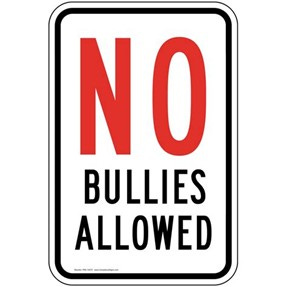
Support for “Gay Rights” is dropping for a simple reason. Americans who are more than willing to live-and-let-live expect others to do the same. When those who make a point about fair treatment become the biggest bullies on the block, sympathy is replaced by anger. We won’t let you bully us and ours. Decades of bullying have changed public attitudes. Bullying has produced antagonism.