
May I? You can’t.
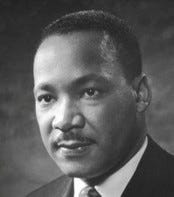
When Martin Luther King spoke of not judging people by the color of their skin, he was trying to end a world where many people could not do what others did. There were far too many cases where people asked, “May I?” and the answer was “No.”
It wasn’t just people with “too much melanin” who were blocked. Those who wanted to interact with them were also blocked. Railroad companies tried to block the rule requiring a separate car for blacks. The extra car added to the cost of moving the train.
There was no architectural or maintenance reason for duplicating bathrooms and water fountains. Hoteliers and restaurateurs saw the green of money more than skin color and would have been more than willing to tell their on-site staff to take money from anyone willing to pay.
Legendary Alabama football coach Paul “Bear” Bryant was having trouble securing permission to recruit black men to the University of Alabama for his football team. He arranged for a West Coast team with talented black players to come to his campus and embarrass his all-white team. He then asked, “Now, may I get Black players on my team?” Winning college football was important enough to bend other rules. He got permission.
I was born in 1946. I remember all kinds of tragic love stories about inter-ethnic, inter-religious, and inter-racial love affairs. In the 1950s, many of the stories ended with these affairs blocked. Yet, in the real world, there were many couples in all those categories. I grew up in Baltimore. In the Fifties and Sixties, there were few white-black couples. There were a fair number of white‑Asian couples. In large cities like mine, interethnic and interreligious marriages were numerous.
Housing and employment opportunities were restricted by race, religion, and ethnicity. I had a part-time job while I was in college working at an A&P. My manager was excellent. He lamented that he would not advance up the company’s corporate chain because he wasn’t Italian. That wasn’t law; it was stupidity. A&P is gone. That’s one of the reasons.
The famous Brown V. Board of Education Supreme Court decision dealt with the fact that Black children were not allowed to attend their closest elementary school if white children went there. In many states, the laws quoted the phrase “separate but equal” and told Black children, “You may not sit next to white children to get an education. The Court told those children, “Yes, indeed, you may.”
King’s famous quote was about moving the country to a point where skin color was irrelevant. Sadly, anger over differences is a way to animate people to vote, give away economic favors, and, for some people, get rich. Once the benefits roll in, the benefits of division make the task of ending them more difficult. Thomas Sowell has published nine books on the use and misuse of racial issues.
You must! I won’t
The public knew things were going the wrong way when racial identification and sorting were accepted as the cure for racial problems. The first issue was busing. No sooner had children been told they could attend their closest school than they were told they couldn’t. We were told that the way to make sure everyone got an evenly good education was to make sure the schools were racially mixed.
Now, children of all races are sent away from their neighborhood schools based on their race. They were told they must use school buses. Parents who crossed picket lines to let children go to the closest schools were called racists for opposing sending children to schools other than their closest school.
This was, of course, resisted. You must! We won’t! Private schools have flourished. Those who could afford it, no matter what their skin color, fled the cities and took their kids out of poor‑performing schools. Many city school systems have never recovered.
Then there are the “educationist” experiments. If the kids weren’t learning, innovative ideas were needed. We can’t use phonics to teach reading. English is too demanding; let’s allow Ebonics. Math is racist. If a child says 2 + 2 = 5, it is simply “white supremacist” to call that incorrect. We are told we must pay ever-increasing taxes to cities and the Department of Education because we are not sophisticated enough to understand their innovations.
We also must let people with external genitals say they are women and walk around naked in female bathrooms and locker rooms. The other people in those rooms must accept that person’s presence. We’ve had courts say this is a form of legal reality.
Those of us who value sanity and freedom of speech don’t want to live in a world where we must let children say 2 + 2 = 5. We also don’t want to be told we must let men say they are women and it is acceptable for them to be undressed where women are changing and showering. That kind of world is insane.
We must work and vote to keep the freedom to call folly, “folly,” and end it.