
I never want to wish harm or illness on anyone, but there are times I’m disappointed that the famous people who are drawing money to treat a medical problem don’t have a certain problem I’m dealing with.
Breast Cancer
In 1974, Betty Ford became First Lady when her husband became President. She had a medical exam a few weeks later, and a breast lump was found. As history.com notes:
There were no guidelines for regular screenings, no fundraising walks, no patient-support groups. At that time, the words breast and cancer were spoken in hushed tones—like something shameful. But Betty was adamant she should be completely open with the American people. How many other women in America must be going through this too? she wondered.
Instead of staying quiet, she kept the public informed step by step. They heard that she had a mastectomy and “the good news that, largely because the cancer had been detected early, the first lady’s prognosis was excellent.”
After she made open discussion possible, ads asking for money became prevalent, and reminders to get preventive screenings were, appropriately, impossible to ignore.
Polio
I am eighty. Those who are seventy or less may fortunately not remember this. Polio was the most frightening word of my early childhood years. It could cause multiple levels of paralysis, including forcing the patient into an iron lung. In the summer, any word of polio would shut down the swimming pools.
There was ambiguity about the treatment of the famous person who had polio. President Franklin Delano Roosevelt had dealt with polio for more than ten years before he became President. The media agreed not to print pictures of him using crutches or obviously “crippled” in any way while he was in office. They agreed that a country facing tough times and then at war needed to feel it had a strong leader.
After his death in 1945, talk about his illness could be more open. History.com has an article describing FDR’s work in starting organizations about Warm Springs and the National Foundation for Infantile Paralysis. NFIP would eventually become known as the March of Dimes. Right after FDR’s death, a campaign started to honor him by putting his image on the dime. The first batch of Roosevelt dimes was released on January 30, 1946, on what would have been his 64th birthday.
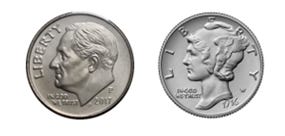
I remember containers near cash registers where you could drop a dime. I also went around the neighborhood with my mother collecting dimes. In those days, a dime bought a candy bar and a soda.
The March of Dimes’ continued financial support for medical research finally paid off when Jonas Salk, a young doctor whose work was funded by a March of Dimes grant, developed a new vaccine to combat polio. In 1954, the March of Dimes helped support a mass vaccination of more than 1.8 million schoolchildren.
Essential Tremor
But what about problems without a spokesman? I have many problems, some of which, like heart trouble, have ample support. Other problems are complicated, and people, for some reason, hesitate to talk about them.
I mention this now because U. S. Senator Susan Collins (R-Maine) just said she has one of those problems, and it is one I share. She said she has Essential Tremor. Her opponents are trying to use it against her. She said, “I have had it for the entire time that I have served in the United States Senate. It has absolutely no impact on my ability to do my job or on how I feel each day.”
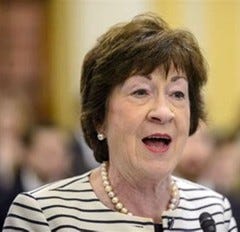
My mother had essential tremor all her life. I have a milder form of it. There are multiple forms of the problem depending on which body part(s) is/are affected. Our systems are amazing devices. Every part is balanced in terms of balance and counterbalance. Our hands, arms, and necks keep everything in perfect smooth balance because the signals coming from the mind are not interrupted or disrupted in any way. The word “tremor” describes the shaking of the affected parts of the body. When it involves the head, arms, or hands, the person seems nervous. They also have trouble eating and need to leave more room in cups of coffee to avoid spills.
Getting a correct diagnosis and treatment for Tremor is difficult. Many Primary Care doctors don’t know about it or know the correct subspecialty for referrals. Movement Disorder specialists focus on diseases in which signals from the brain no longer cleanly control body parts. I go to such a specialist at Duke. They have a useful page describing their work.
They can distinguish between various movement diseases. One of those, Parkinson’s, progresses at a rate and has such serious symptoms that I would not vote for a Parkinson’s patient for a six-year government office. Essential Tremor is quite different. My mother lived for at least forty-five years with an obvious tremor. I think I’ve had at least a mild case for most of my life. It has been clear, obvious, and progressing for twenty-five years. New computerized tools such as voice-to-text are making my life easier every day.
I also host a monthly Zoom support group on the first Wednesday afternoon, operated by Hopenet (https://thehopenet.org/blog2/).
Collins released her medical information for at least two reasons. First, she could confirm that she has Essential Tremor and not Parkinson’s. Second, she lets people understand that what they see as nervousness is a medical symptom, not nerves or fear.
I’ve dealt with this problem for years, and I saw what my mother went through. I often joke that I am anything but “the shy and retiring” type. But I am aware of my tremor when I consider putting together a talk or presentation.
I don’t live in Maine. I can’t vote there. But I can say this. For many people with this problem, the idea of mixing socially is daunting. Giving a talk is almost unimaginable. Engaging in the amount of public interaction and speechmaking needed for a political campaign is a serious undertaking for anyone. For someone who has Essential Tremor to take on this task is amazing and very encouraging to everyone else who has this problem.