
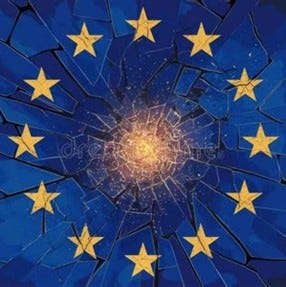
When historians describe revolutions, they discuss the events leading up to them and precisely define the significant dates and events. Some who are living through those times may sense that things are unstable; some want change, while others want everything to remain as it is. No one knows the triggering events or dates, or what the future will look like.
Romanian leader Nicolae Ceaușescu led his country for more than twenty years. Former Secretary of State Condoleezza Rice often recounted the sudden, unexpected, and violent end of his rule. In 1989, amid all the revolutions in the Warsaw Pact countries, he was giving a speech to
250,000 Romanians. … All of a sudden one old lady yelled “Liar!” and then ten people and then a thousand people and then ten thousand and then a hundred thousand and all of a sudden Ceaușescu knew that something was wrong and so he turned, and he tried to run and the young pilot who was to take him away in a helicopter instead turned and delivered him to the revolution and he and his wife Yelena were executed by the revolution.
Rice explains the lesson from this:
[In a] system [where] people have no peaceful way to change their government … every authoritarian fears … the Ceaușescu moment. … the moment when their people lose their fear of them, and when all that stands between them and their people is a ragtag effort to mobilize that last measure of force to quiet the voices of their people, and it rarely really works.
John F. Kennedy said something similar when talking about the civil rights movement: “Those who make peaceful revolution impossible will make violent revolution inevitable.”
Rice and JFK described the need to ensure that the rights to expression and change were available to socially approved groups. Those are not the groups whose expression is currently being suppressed. But the truth still applies.
This principle is not limited to states that are formally autocratic or dictatorial. The leaders of European and Anglosphere nations are concerned with maintaining power at all costs. They are destroying anything and everything for a temporary gain, with no regard for the long-term damage to institutions and trust.
The courts and “intelligence reports” help overturn election results and block the path to power of those who won’t go along.
In Germany, the AfD (Alternative für Deutschland) is gaining support for its positions against open immigration and in favor of ending sanctions on Russian fuel. So far, the other parties have refused to join them to form a ruling coalition. There is also talk of outlawing them as a “Nazi” party under the German constitution.
The French government and economy are in chaos. President Emmanuel Macron is unpopular and continues to seek a prime minister who can form a government that will last over the weekend. Macron could call parliamentary elections, but the establishment doesn’t want to see the results. Marine Le Pen is the most popular politician in France, but she has been convicted of a campaign-fund violation and banned from running for office. Her party might win anyhow.
In the same Romania where Ceaușescu was overthrown, the voice of the people was ignored. Calin Georgescu won the most votes in the first round of the 2024 presidential election. He favored closer ties with Russia to secure cheaper natural gas and cutting aid to Ukraine. He was ready to advance to the runoff. Instead, the sitting president released intelligence reports alleging a Russian interference campaign. Romania’s Constitutional Court annulled the results of the first round of voting. The whole mess wasn’t settled until May. Eventually, the pro-NATO, pro-Ukraine faction achieved its objectives.
In 2022, Brazilian President Jair Bolsonaro and his followers had reason to be concerned about the honesty of the election he had lost. A Britannica article noted that:
“In September 2025, Brazil’s Supreme Court convicted him on coup-related charges and sentenced him to 27 years and three months in prison for seeking to hold onto presidential power after his 2022 loss to Luiz Inácio Lula da Silva.
They added, sardonically,
The prosecution was the first of its kind against a former president, despite Brazil’s long history of coups and coup attempts dating back to the end of the monarchy in 1889”
Konstantin Kisin was born in the Soviet Union. He moved to and became a citizen of the United Kingdom. He was a comedian and became a social commentator. He is genuinely concerned about the treatment of speech in the UK. In a conversation with former Australian Deputy Prime Minister John Anderson, he discussed the issue of individuals being arrested for statements made on social media. Kisin noted that there had been four hundred arrests in Russia and 3,300 in Britain.
The United States government had complained about attacks on U.S.-based social media companies for posts the British government didn’t like, but which were well within our free speech limits. UK Prime Minister Starmer is very unpopular and is trying to limit the expression of that fact.
I don’t know when it will happen. The word “comeuppance” refers to the moment when what is due is meted out. The so-called establishment is ruling for its own agenda and in the short term. That can’t continue. I don’t know what the spark will be. I don’t know when it will be. Too many people are on the short end of the stick and ready to shout, “Liar!”
It is bound to happen.