
Science fiction and Science often push the advancement of ideas in each other. That was especially true with the Star Trek television series. Doors opened automatically, computers had immense memory capacity and could answer almost any question. I remember working with room-sized mainframe computers in the early 1970s, with severely limited memory, and being amazed by the capabilities of the ship’s computers.
Artificial Intelligence is a constant goal and a dream in the field of computing. Star Trek envisioned an AI device called the medical tricorder. It was a tool for Dr. McCoy in the “Original Series” (STOS).
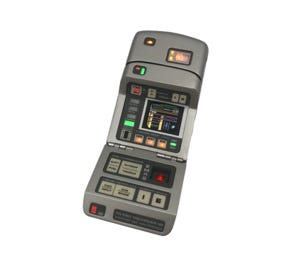
McCoy constantly grumbled about the primitive state of medicine back in the 20th century. In the 24th century, he could scan the patient with a tricorder. It would determine the symptoms, perform the necessary tests, generate a diagnosis, and prepare the appropriate treatment while considering any contraindications. We’re obviously not there yet. TV has good scriptwriters.
In the meantime, there is work to make AI more effective across all fields, including medicine. A group called XPrize is offering seven-figure prizes for serious progress on these medical devices. A major step has been taken, and a considerable prize has been awarded.
In the last week, I had two conversations with physicians about AI tools and their use in medicine.
The first doctor is a noted specialist in Movement Disorders. This specialty treats a group of problems including Essential Tremor (ET), Parkinson’s disease, Huntington’s disease, dystonia, and others.
I have ET and have been treated by this kind of specialist for years. The visits involve walking, standing, and moving my hands and arms. I can’t recall any diagnostic blood work or body scans. The doctors view my actions and produce a diagnosis based on my symptoms. They must determine which disease(s) a patient has to determine the correct treatment.
I am in an ET support group with a monthly YouTube conference call. In the latest call, a doctor discussed using ChatGPT to consider which disease the patient might have, given the observed symptoms. The problem is simple. He must be careful in how he specifies the symptoms. Is the tremor a two or a ten on a scale of 1-10? How unsteady is the walk?
The result will be quite different if he omits one symptom or slightly exaggerates another one. He walked us through some example calls, including one with incomplete information. Then he added more information and got a more complete answer.
In this specialty, the symptoms are diagnostic information. Other illnesses are important to the extent they add to tremors or dizziness. The patient’s medications are important for contraindications.
I know the other doctor at my church. He is a Surgical Pathologist. He reviews biopsy slides and blood samples and provides opinions on whether the material is malignant or benign. This is often done while the surgeon is waiting to decide what to do next in terms of cancer surgery.
He described a tool called Hologic from Genius AI, a major AI support tool for his specialty. It reviews X-rays and highlights potential areas of concern. Physicians can start with those markings and see if they make sense. Other areas of the slides would then be scanned to check whether the tool missed anything.
The quality of AI is the same as any other computer tool. Output quality varies based on input quality. Hologic was developed in collaboration with the relevant specialists, who clearly outlined the rules for identifying what required attention. They also helped direct attention away from known false flags.
Every cooperating doctor knows the need to put patient health first. They don’t completely trust any input, either human or machine. Even other doctors can be wrong. But they should be seeing Hologic as an apprentice who needs more attention. They can report anything it misses. Subsequent product releases will be the same as a better-trained apprentice.
I know the idea of a computer as an apprentice may startle some people. I’ve dealt with computers for more than fifty years. It is important to know enough to recognize when the computer is giving or permitting an incorrect result.
We have too many people of the other type. Store clerks can’t tell when the change is wrong, and newspaper articles have bad grammar and werse speling. (Yes- I did that on purpose.)
Computers are excellent tools if they remain tools. Science fiction, including Star Trek, consistently explored societies lacking the knowledge to manage or fix their computers. They were either slaves to computers or on the verge of collapse.
Science fiction writers have warned us that when medical tricorders are available, they will be given to people who trust them because they’ll have little medical training. They may not even be able to benefit from the training if it were available.
I don’t know how we do it. But we need to keep training doctors who can use any AI tool and have the skill to stop and wonder if the tool is missing something.