
John F. Kennedy - April 29, 1962, Speaking to Nobel Prize Winners
I think tahis is the most extraordinary collection of talent, of human knowledge, that hs ever been gathered together at the White House, with the possible exception of when Thomas Jefferson dined alone.
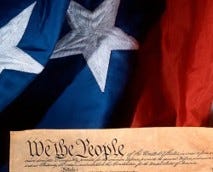
America’s founders had every reason to consider themselves exceptional and look to the standard models of government, where the self-anointed “better people” put themselves in control of everything and leave the masses with no authentic way to overrule them.
There have been many such forms of government over time. In fact, most systems are that way. First, we must be clear about our terminology. There is Benjamin Franklin’s famous response when he was asked what kind of government the convention had produced: “A republic, if you can keep it.” It was not the kind of republic described by Plato in his famous work, The Republic. Neither was it a democracy in any form remotely resembling that term as it applied in Plato’s lifetime.
It is a form of representative government in which elected leaders specialize in public issues, much like tradesmen and others who focus on other skills. The public knew good and bad farriers, coopers, and dressmakers. They also had ideas about political leaders and could choose among them. Each of these skilled people had opinions about other craftspeople but could not tell people who to use.
People went to the best provider they could afford. “Best” is something each customer decides. Every service provider understood the need to continually maintain or improve their service. The public evaluated and purchased services they were not equipped to perform. They could not make a multi-drawer desk, but they could tell who made better desks.
As citizens, they played a similar role. They may or may not have had the material resources to keep up with government issues, but they had a sense of how those in offices performed. Regular election cycles gave the voters a way to announce their decision on the quality of the work being done.
The founders clearly rejected forms of government lacking that kind of feedback. Obviously hereditary monarchy was out. They also rejected Plato’s version of a trained group of the “best and the brightest” selected, separated, and raised from birth to be the wisest and therefore best suited to govern and decide all issues for the society.
Our revolution occurred in 1776, and the Constitution was written in 1787. George Washington was inaugurated as the first President on April 30, 1789. July 14, 1789, was seventy-five days later. That is France’s Bastille Day.
We have had one government with, admittedly, a civil war. The French began by attempting to completely change their calendars, clocks, and everything else. They had a “reign of terror” with a very active “Madame Guillotine”. The leaders of the terror ended their lives at her hands.
They’ve had multiple monarchical governments, a Napoleonic Empire or two, and are now in their Fifth Republic. France is heavily bureaucratic. They created The École nationale d’administration (ENA) to democratize access to the civil service. It has apparently become more like a filter stopping those who are not graduates.
Charles de Gaulle led the design of the Fifth Republic in 1958 with a strong Presidency. He was the first President. The current President, Emmanuel Macron, is an ENA graduate but is politically weak. There is growing talk of a sixth republic.
The essential difference between the American and French Revolutions is in their understanding of rights. America’s Bill of Rights is essentially the right to be left alone. It is what the government can’t do to you without due process of law. It also covers the rights we all have “equally, endowed by our creator” to speak up and voice our complaints.
In the French view, rights are things to which we are entitled. The government must get the resources to provide those things. That kind of government must be bigger, greedier, and more intrusive.
Hannah Arendt didn’t get caught up in the phony distinction between Nazis and Communists. She put them together and wrote The Origins of Totalitarianism. This is a study of those who lead this kind of change, as well as the psychology of the public as it unfolds.
We saw the disasters of totalitarian governments in Russia, Germany, China, Cuba, Cambodia, and elsewhere. Yet there are still people who believe they can become the leaders of a totalitarian government that won’t fall into those traps.
Friedrich A. Hayek lived through those disasters in Europe and wrote The Road to Serfdom as a warning.
This year is the 250th anniversary of the Declaration of Independence. It is a great tragedy that too many arrogant and ungrateful people don’t understand the wonderful and unique nature of Western civilization and the form of government the Founders created.
Antonio Gramsci understood that America was not ready for a Communist revolution because the public had too much respect for its society and culture. Bradley Thomas of FEE described Gramsci’s strategy. It involved “of a ‘war of position’ for socialists and communists to subvert Western culture from the inside.”
the main groundwork being the development of a collective will among the people and a takeover of leadership among civil society and key political positions.
…
Gramsci spoke of organizations, including churches, charities, the media, schools, universities, and “economic corporate” power, as organizations that needed to be invaded by socialist thinkers.
Let me be clear. These people have a goal in mind. It is not the defense of the Constitution. They are certain they’re smarter than their neighbors and that in a socialist government, their brilliance will be recognized. They will have the authority to help set production and resource allocation and keep their neighbors from harming themselves or society by making poor decisions.
You may think they’ll make your life better by getting money from somebody richer than you are. They won’t. Those societies always make everybody poor.
You have a role to play in the voting booth. Especially in primaries, socialism is not about fairness. It is the path to tyranny.
We’ve had an amazing and unique form of government for a quarter of a millennium. It would be a shame to let small-minded egotists talk us into something else.